One Broken Nation
What one generation survives, the next must come to understand.
The Civil War
1861-1865
Some nations fracture slowly. Others break all at once.
The American Civil War was both.
For decades the United States expanded across a continent while carrying an unresolved contradiction at its center. The country celebrated liberty while sustaining a system of slavery that denied it. Political leaders attempted to preserve balance through compromise — dividing territories, negotiating legislation, constructing fragile alliances between regions whose economies and values were growing increasingly incompatible. Eventually those compromises failed.
By the mid-nineteenth century the nation contained two fundamentally different systems: an industrializing North built on wage labor and expanding commerce, and a plantation South built on enslaved labor and inherited hierarchy. These systems could coexist only while each believed its future could continue expanding westward. When that expansion became contested, the conflict turned irreconcilable. In 1861 the tension finally erupted.
The war that followed did more than devastate cities and farmland. It shattered the belief that the American experiment could always resolve its conflicts peacefully.
More than six hundred thousand lives were lost. Entire communities were destroyed. Slavery was abolished, yet the social order that had sustained it did not disappear overnight. The nation survived. But something fundamental had been broken.
Two Worlds, Side by Side
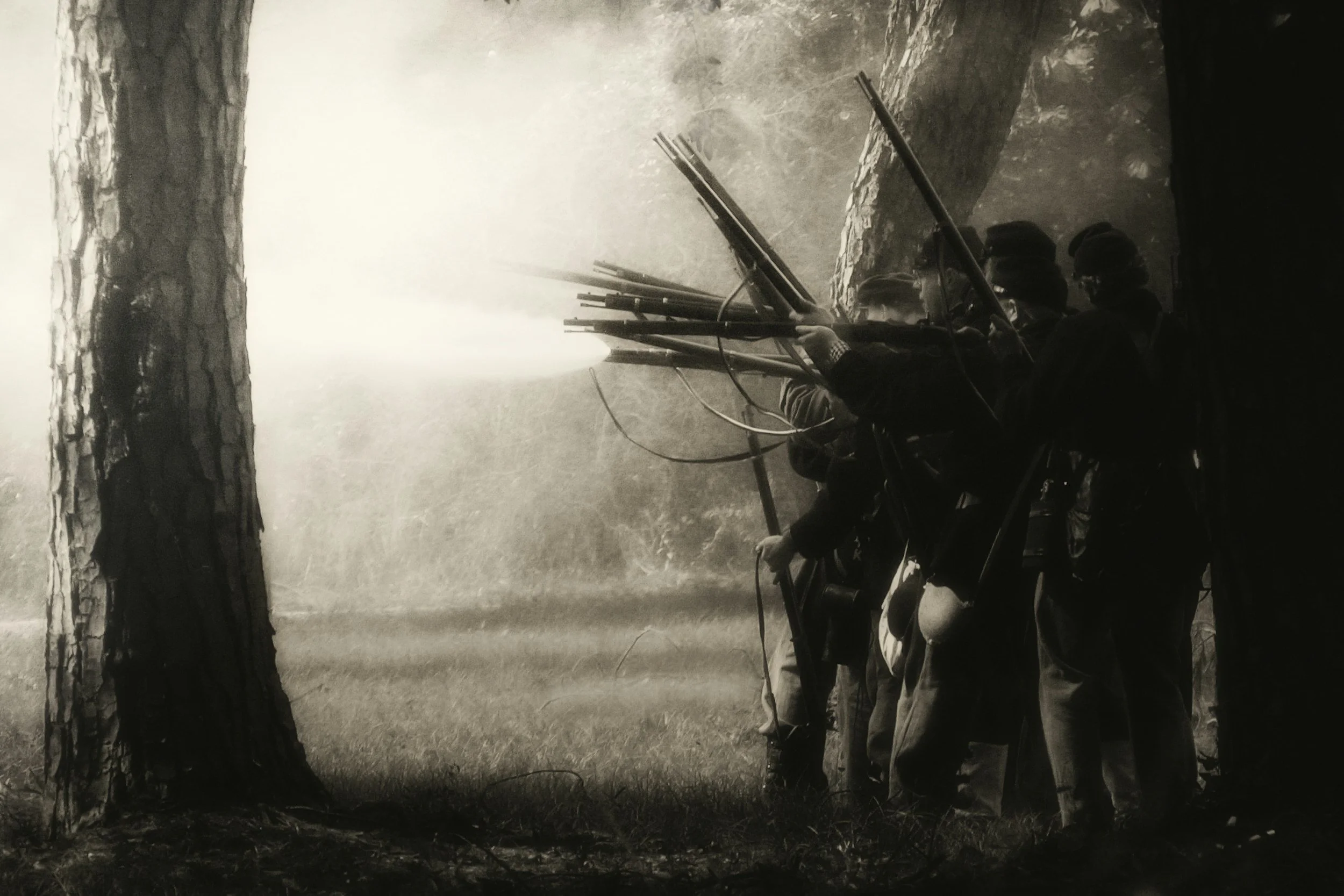
In the years surrounding the Civil War, Americans were living inside two different versions of the same country. One world believed it was defending tradition, land, and honor — a social order that had existed for generations. The other believed it was defending freedom, opportunity, and the promise of progress. Both believed they were protecting the future.
The conflict did more than divide regions. It divided families, churches, and towns. Brothers fought on opposing sides. Neighbors learned to watch one another carefully.
Trust — once the quiet foundation of community — became fragile. And beneath the political arguments lay a deeper question.
Who belonged in this country?
Who held authority within its future?
Who had the right to stand inside its promises?
The war forced those questions into the open. And once they were asked, they could never again be ignored.
Children of the Rupture
History tends to record wars through generals and battlefields. But the deepest consequences appear in the lives of children who inherit the aftermath. One of those children was my third great-grandmother, Elizabeth McKamey, born in 1847 in the mountains of East Tennessee.
Her childhood unfolded in the shadow of the Appalachian foothills, where narrow valleys and dense forests had long provided refuge for people living outside the boundaries of official society. Some families in these mountains descended from Cherokee communities who had resisted removal during the Trail of Tears, choosing to hide in the rugged terrain rather than abandon their homeland.
Elizabeth was believed to come from one of these communities. When the Civil War reached the region, violence spread even into the isolated mountain settlements. It is assumed that Elizabeth’s parents were killed during this period, leaving her a child alone in a landscape suddenly ruled by soldiers and opportunists. Without protection or a family to claim her, she was placed into slavery.
Years later, after the war ended, a man named Daniel Crass recognized who she was and knew that her enslavement had been unjust. To shield her from being forced back into captivity, he devised a quiet solution to marry her under the name of a neighboring woman who had recently moved away. Legally, the marriage protected her. Socially, the story lingered as people began to recognize her as the domestic servant of John McKamey.
Elizabeth lived only to the age of thirty-seven, dying not long after the death of one of her young sons. She and the child were buried quietly on family land behind the house — a private cemetery that reflected a life lived close to the margins of public acceptance.
Another child shaped by the war was my second great-grandfather, George W. Gray, born just before the conflict began.
When Confederate enthusiasm swept through Southern towns after the early battles of the war, George’s father enlisted. He was wounded in his first engagement and died soon afterward from illness.
George was only three years old.
His mother eventually remarried a violent and domineering man who forced the family into harsh agricultural labor far from the town George remembered. The resentment that grew inside him hardened as he matured — resentment toward the stepfather who replaced his father, toward the life he had been forced into, and toward a loss he had never been old enough to understand.
Neither Elizabeth nor George fought in the Civil War. But they lived their entire lives inside its consequences.
Rebuilding Order Through Exclusion
After societies experience collapse, they attempt to restore order as quickly as possible.
In the South, the end of the Civil War did not simply dismantle the old hierarchy. It destabilized it. Communities responded by rebuilding strict boundaries around race, class, and belonging.
At the top stood established white families whose authority had survived the war.
Below them were working-class whites struggling to maintain dignity in a shattered economy.
Beneath both were newly freed Black communities and Indigenous people whose presence complicated the fragile structure society was trying to reconstruct.
Elizabeth McKamey existed in a space that unsettled all of these categories.
If she was Cherokee, she represented a people whom many white settlers believed should never have remained on the land.
If she had been enslaved, she embodied the social disruption of emancipation.
And if she married a white man, she crossed a boundary the new social order was trying desperately to enforce.
Her existence was not simply controversial.
It was destabilizing.
Communities recovering from upheaval often reinforce belonging by deciding who must remain outside the boundary.
The Emotional Atmosphere
The Civil War ended in 1865.
But the emotional climate it created lingered far longer.
Suspicion between neighbors became normal. Identity hardened into categories. Pride and endurance replaced vulnerability as measures of strength.
These attitudes filtered quietly into family systems.
Children raised amid instability learned to rely on self-protection. Trust became difficult. Emotional restraint became a survival skill.
George Gray grew into a man whose unresolved anger led him toward alcohol, gambling, and volatility. His children inherited the instability those choices created.
Elizabeth McKamey’s descendants inherited something different — the quiet knowledge that security could disappear overnight and that survival sometimes required silence.
Different stories.
The same inheritance.
Both were shaped by a nation that had nearly destroyed itself.
Breaking the Pattern
Every generation inherits more than names and land. We inherit emotional strategies that helped our ancestors survive.
Endurance.
Pride.
Suspicion.
Silence.
These traits once protected families navigating violence and instability. But when they continue long after the crisis has passed, they begin to shape lives in ways that no longer serve the present.
Understanding the Civil War as a psychological rupture allows us to ask a different kind of historical question:
What survival patterns were born during that time that still live inside our families today?
History rarely repeats because events are identical.
It repeats because the emotional habits created by those events remain unseen.
And until those patterns are understood, they quietly continue their work beneath the surface of every new generation.
The Civil War left the nation physically exhausted and socially fractured.
But Americans have rarely remained still for long.
In the decades that followed, the country turned its attention toward rebuilding. Railroads stretched across the continent. Factories multiplied. Cities expanded. Industry promised a new kind of future — one built not on land and hierarchy, but on production, innovation, and progress.
The energy that once fueled war was redirected toward work.
For many Americans, the answer to the chaos of the past became simple: build something stronger.
But every solution carries its own consequences.
The Industrial Revolution did not simply rebuild the nation.
It reshaped the meaning of strength itself.